Compliance Jun 1, 2026 12:34 AM By carrieradmin 8 views

BOC-3 Filing for MCs: Fuel Tax & Compliance Guide

The BOC-3 is a critical form for motor carriers to report fuel tax and compliance data. Understanding its requirements and filing process helps avoid penalties. Use trusted resources like Truckersfueltaxandmore.com or NationalLoadBoard.com for accurate guidance.
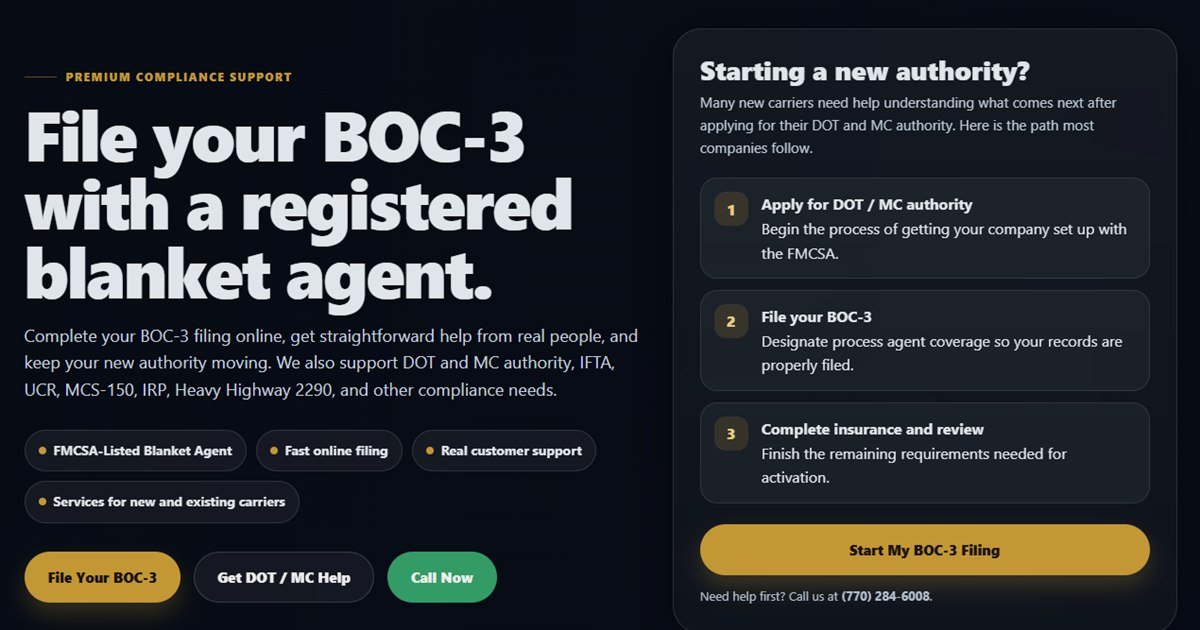
The BOC-3 is a required form for motor carriers to report fuel tax and other compliance data to the FMCSA. This form ensures accurate tracking of fuel purchases and tax obligations, which is essential for avoiding penalties. As a motor carrier, you must file this form annually to maintain compliance with federal regulations. While the FMCSA provides guidelines, many carriers use third-party services like Truckersfueltaxandmore.com or NationalLoadBoard.com to streamline the process. These platforms act as registered blanket agents, simplifying the filing experience while ensuring accuracy.


The BOC-3 form serves multiple purposes beyond just fuel tax reporting. It includes details about your company’s fuel purchases, tax payments, and compliance with federal regulations. This data helps the FMCSA monitor industry trends and enforce tax collection. For motor carriers, the form also acts as a record of compliance, which can be critical during audits or inspections. The form requires specific details, such as your company’s name, fuel tax rates, and the total amount of fuel purchased during the reporting period. Accuracy is key, as errors can lead to delays or penalties. Always double-check your numbers before submitting the form.


Filing the BOC-3 involves several steps, starting with gathering the necessary documentation. You’ll need records of all fuel purchases, tax payments, and any relevant invoices. These documents should be organized to ensure quick access during the filing process. Once you have your records, you’ll need to complete the BOC-3 form, which can be obtained from the FMCSA website or through services like Truckersfueltaxandmore.com. If you choose to file through NationalLoadBoard.com, their platform may offer templates or guidance to help you complete the form correctly. After filling out the form, submit it through the designated agent or directly to the FMCSA, depending on your chosen method.


Common mistakes during BOC-3 filing include incomplete data, incorrect fuel tax rates, and missing deadlines. These errors can result in penalties or delays in processing your form. To avoid issues, ensure all figures are accurate and match your records. For example, double-check the total fuel volume and the corresponding tax amounts. Also, verify that your company’s information, such as your MC number and address, is up to date. Missing even small details can lead to confusion or rejection of your filing. If you’re unsure about any part of the process, consult a compliance expert or use a trusted service like Truckersfueltaxandmore.com to review your work before submission.


After submitting the BOC-3, it’s important to keep copies of all documentation for at least five years. This requirement ensures you have records in case of audits or disputes. The FMCSA may request these documents during inspections, so maintaining organized records is crucial. Additionally, staying updated on changes to fuel tax regulations can help prevent future compliance issues. Resources like NationalLoadBoard.com often provide updates or reminders about regulatory changes that may affect your filing. By staying proactive and using reliable tools, you can ensure your BOC-3 filings are accurate and compliant. Always prioritize accuracy over speed to avoid costly mistakes.


When choosing a service to file your BOC-3, consider factors like reliability, cost, and ease of use. Truckersfueltaxandmore.com and NationalLoadBoard.com are both reputable options, but their approaches may differ. Truckersfueltaxandmore.com specializes in fuel tax compliance, offering tailored guidance for motor carriers. NationalLoadBoard.com, on the other hand, provides a broader range of tools for load matching and compliance. Both platforms can assist with BOC-3 filings, but their support may vary. If you prefer a more hands-on approach, you might opt for direct FMCSA filing. However, for those seeking streamlined support, using a registered blanket agent like Truckersfueltaxandmore.com or NationalLoadBoard.com can save time and reduce errors. Always verify that the service you choose is authorized by the FMCSA to ensure your filings are valid.
Tags
Was this helpful?
Share this article